
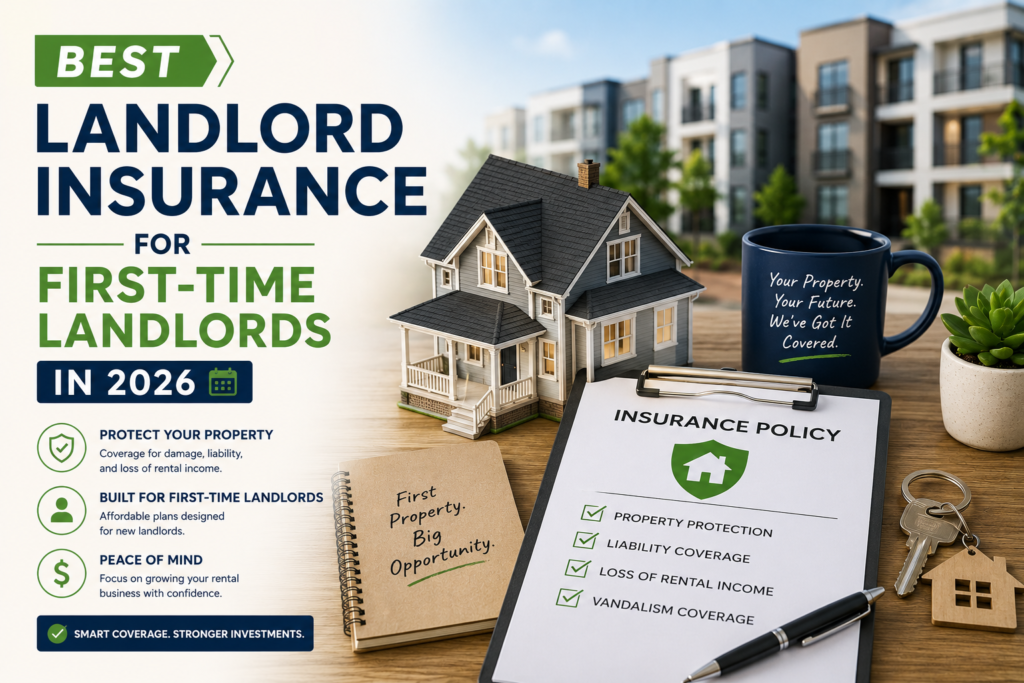
The most common mistake first-time landlords make isn’t picking the wrong insurer — it’s not switching policies at all. If you’re renting out a home you used to live in, or one you just purchased as a rental, a standard homeowners policy isn’t the right product, and using it anyway can mean a denied claim right when you need coverage most. Landlord insurance (also called rental property or dwelling insurance) is typically required if you carry a mortgage on the property, and it’s structured differently from the policy you’d use for a home you live in yourself. Here’s how the top options compare in 2026.
Quick Answer: Best Landlord Insurance for First-Time Landlords
| Company | Best For | Notes |
|---|---|---|
| The Hartford | Best Comprehensive Overall | Strong all-around coverage and reputation |
| Steadily | Best for First-Time Landlords | Landlord Hub with lease templates, eviction notices, and guides |
| biBERK | Most Affordable | Backed by A++ rated underwriters; strong online tools |
| American Family | Best Digital + Agent Support | Landlord Toolbox; network of 1,700 agents |
| Liberty Mutual | Most Customizable | Add-ons like inflation protection; bundling discounts |
| State Farm | Best In-Person Local Support | Extensive agent network; strong bundling options |
| Foremost | Best for Specialty/Older Rental Properties | Flexible underwriting for higher-risk properties |
| Nationwide | Best for Bundling with Personal Policies | Multi-policy discounts across personal and rental coverage |
*Coverage options, discounts, and availability vary by state and property type — always confirm current details directly with the carrier.
Why You Can’t Just Keep Your Homeowners Policy
A standard homeowners policy (commonly called an HO-3) is priced and written for a home the owner lives in. Once you rent the property to a tenant, the risk profile changes — a landlord has less day-to-day oversight of the property, faces potential loss of rental income if the home becomes unlivable, and carries different liability exposure for tenant or guest injuries. Landlord insurance (often a DP-3 «dwelling fire» policy) is built specifically around these differences, typically covering:
- Dwelling coverage — the structure itself, similar to a homeowners policy
- Loss of rent coverage — replaces rental income while the property is being repaired after a covered loss
- Liability coverage — protects you if a tenant or their guest is injured on the property
- Fire, storm, water, vandalism, and burglary coverage — protection against the most common and costly perils facing rental properties
Critically, landlord insurance does not cover your tenant’s personal belongings. That gap is exactly why it’s worth encouraging (or requiring, through your lease) tenants to carry their own renters insurance — it protects them, and it can reduce disputes after a loss.
The Hartford — Best Comprehensive Overall
The Hartford is frequently recommended for comprehensive overall landlord coverage, offering a well-rounded combination of dwelling, liability, and loss-of-rent protection alongside a strong overall reputation for service and claims handling.
Pros:
- Well-rounded, comprehensive coverage across core landlord needs
- Strong overall reputation for claims service
- Established insurer with broad experience insuring rental properties
Cons:
- Not specifically built around first-time landlord education, unlike Steadily
- Quotes typically go through an agent rather than an instant online process
Best for: First-time landlords who want a well-established, comprehensive policy without needing extensive built-in educational resources.
Steadily — Best for First-Time Landlords
Steadily stands out specifically for first-time landlords, offering quotes in under a minute through a fully digital platform, along with a «Landlord Hub» of downloadable resources — lease templates, eviction notice forms, and directories for lenders and property managers — aimed at helping new landlords navigate the parts of the process that have nothing to do with insurance but come up constantly anyway.
Pros:
- Extensive educational resources built specifically for first-time landlords
- Very fast online quote process
- Coverage for fire, storm, water damage, vandalism, liability, and loss of rent all included
Cons:
- Newer company than legacy insurers like The Hartford or Liberty Mutual
- Fully digital model may not suit landlords who prefer an in-person agent relationship
Best for: First-time landlords who want fast online quotes plus practical guidance on running a rental, not just an insurance policy.
biBERK — Most Affordable
biBERK is frequently recognized as the most affordable landlord insurance option, while still being backed by underwriters holding a top-tier A++ AM Best rating and an AA+ from S&P — meaning the lower price doesn’t come at the expense of financial strength. Its 24/7 claims center allows claims to be filed in as little as 10 minutes.
Pros:
- Frequently the most affordable option among rated competitors
- Backed by underwriters with top-tier A++ AM Best ratings
- Fast, 24/7 digital claims process
Cons:
- Some underlying carriers have received a higher-than-expected number of complaints in industry data
- Less brand recognition than legacy multi-line insurers
Best for: Budget-conscious first-time landlords who still want strong underlying financial strength ratings.
American Family — Best Digital + Agent Support
American Family lets landlords get quotes online at their own pace, while also providing access to a network of roughly 1,700 agents for landlords who want in-person or phone support. Its «Landlord Toolbox» resource covers practical topics like marketing a rental property and vetting applicants — useful territory for someone renting out a property for the first time.
Pros:
- Flexible online or agent-assisted quote process
- Landlord Toolbox resources beyond just the insurance policy itself
- Relatively few complaints reported to the NAIC for a company of its size
Cons:
- Available in a more limited number of states than the largest national carriers
- Not the cheapest option compared with biBERK
Best for: First-time landlords who want the flexibility to shop online but still have agent support available if questions come up.

Liberty Mutual — Most Customizable
Liberty Mutual lets landlords build a policy tailored closely to their specific property, including add-ons like inflation protection on top of standard coverage such as fair rental value and fire, wind, and hail protection. Discounts are available for bundling landlord insurance with personal home and auto policies, staying claims-free for five or more years, or requesting a quote before an existing policy with another carrier expires.
Pros:
- Highly customizable coverage, avoiding paying for features you don’t need
- Multiple discount opportunities, including bundling and claims-free history
- Established insurer with a long operating history
Cons:
- Quotes typically require a phone call with an agent rather than instant online pricing
- Customization can make comparing quotes across insurers slightly more complex
Best for: First-time landlords who want to build a precisely tailored policy rather than accepting a one-size-fits-all package.
State Farm — Best In-Person Local Support
State Farm is a strong choice for first-time landlords who want to work with a local agent experienced in their specific market, offering guidance on property damage, liability, and lost rent coverage, along with solid bundling discounts if you also insure your own home or vehicles with State Farm.
Pros:
- Extensive local agent network with market-specific experience
- Strong bundling discounts alongside personal home and auto policies
- Reliable overall reputation and claims history
Cons:
- Not always the cheapest option compared with biBERK or budget-focused competitors
- Coverage customization is somewhat less flexible than Liberty Mutual’s approach
Best for: First-time landlords who want face-to-face guidance from an experienced local agent.
Foremost — Best for Specialty/Older Rental Properties
Foremost focuses on specialty and higher-risk residential properties, making it a useful option for first-time landlords renting out an older home or a property that doesn’t fit standard underwriting criteria at mainstream insurers.
Pros:
- Flexible underwriting for older or higher-risk rental properties
- Established reputation in the specialty insurance space
- Coverage options tailored to properties that don’t fit standard criteria
Cons:
- Pricing reflects the higher-risk focus and may not be the cheapest for well-maintained properties
- Less brand recognition than the largest national insurers
Best for: First-time landlords renting out an older or unconventional property that’s been difficult to insure elsewhere.
Nationwide — Best for Bundling with Personal Policies
Nationwide offers landlord insurance alongside its personal home and auto lines, extending multi-policy discounts across your personal and rental property coverage if you’re insuring both with the same company.
Pros:
- Multi-policy discounts spanning personal and rental property coverage
- Broad availability across most states
- Straightforward digital quoting process
Cons:
- Not available in every state for both personal and landlord policies
- Less specialized in rental-specific education than Steadily or American Family
Best for: First-time landlords who already have personal home and auto insurance with Nationwide and want to add landlord coverage under the same account.
How We Chose These Companies {#how-we-chose}
InsureAtlas’s rankings are based on publicly available information: each carrier’s disclosed landlord insurance coverage options, third-party financial-strength ratings (AM Best, S&P), independent consumer satisfaction and complaint data, and published resources aimed at first-time landlords specifically. No insurer can pay to appear higher on this list, and our rankings are not based on affiliate commission rates. Because landlord insurance pricing and coverage needs depend heavily on your specific property, location, and rental situation, we recommend getting quotes from at least two or three carriers before deciding.
What First-Time Landlords Should Know Before Buying
Notify your insurer before you rent out the property. Converting a home you live in to a rental without updating your policy can result in a denied claim — insurers need to know the property’s actual use to price and cover it correctly.
Understand what’s excluded, not just what’s included. Standard landlord policies typically don’t cover flood or earthquake damage (same as homeowners insurance), and coverage for malicious damage caused specifically by tenants sometimes comes with conditions or limitations — confirm the specifics with your insurer.
Require tenants to carry renters insurance. Since landlord insurance doesn’t cover tenants’ personal belongings, requiring renters insurance in your lease can reduce disputes and protect your tenant’s own interests after a loss.
Factor in loss-of-rent coverage carefully. If your rental property becomes uninhabitable after a covered loss, this coverage replaces lost rental income during repairs — confirm the coverage period and limits align with how long repairs could realistically take.
Ask about discounts for security features. Security cameras, leak detectors, and other smart home technology can meaningfully lower your premium at insurers like American Family — worth confirming even if the property isn’t equipped yet, in case it’s a worthwhile upgrade.
Frequently Asked Questions
Do I need a special insurance policy if I’m renting out my former home? Yes. A standard homeowners policy is priced for owner-occupied homes and typically doesn’t provide the right coverage once you have tenants — landlord insurance (sometimes called a dwelling fire or DP-3 policy) is built specifically for rental properties.
Does landlord insurance cover my tenant’s belongings? No. Landlord insurance covers the structure, your liability, and lost rental income — it does not cover a tenant’s personal property. That’s why requiring tenants to carry their own renters insurance is a common and reasonable lease requirement.
How much more expensive is landlord insurance than homeowners insurance? Landlord insurance is often somewhat more expensive than homeowners insurance for the same property, reflecting the added risks of tenant occupancy, potential loss-of-rent claims, and different liability exposure — the exact difference depends on your insurer, location, and property.
Is landlord insurance required by law? It’s not typically required by law, but it’s commonly required by mortgage lenders if you carry a loan on the rental property, and it’s strongly recommended even if you own the property outright, given the liability and loss-of-rent exposure landlords face.
Can I get landlord insurance for a property I haven’t rented out yet? Yes, and it’s advisable to have it in place before your first tenant moves in — some insurers also offer specific coverage for vacant rental properties between tenants, which is worth asking about separately if your property will sit empty for a period.
Bottom Line
Steadily stands out specifically for first-time landlords thanks to its educational resources and fast digital process, while The Hartford and Liberty Mutual are strong choices if you want comprehensive or highly customizable coverage from an established insurer. If affordability is your top priority, biBERK is worth a direct quote, and State Farm or American Family are solid picks if you want local agent support while you’re still learning the ropes. Whichever insurer you choose, make sure you actually switch from a homeowners policy to proper landlord coverage before your first tenant moves in — it’s the single most common and costly mistake new landlords make.
This article is for general informational purposes only and does not constitute financial, legal, or insurance advice. Coverage availability, rates, and policy terms vary by state, insurer, and individual property, and are subject to change. Always confirm current policy details directly with the insurance company or a licensed agent before purchasing.