
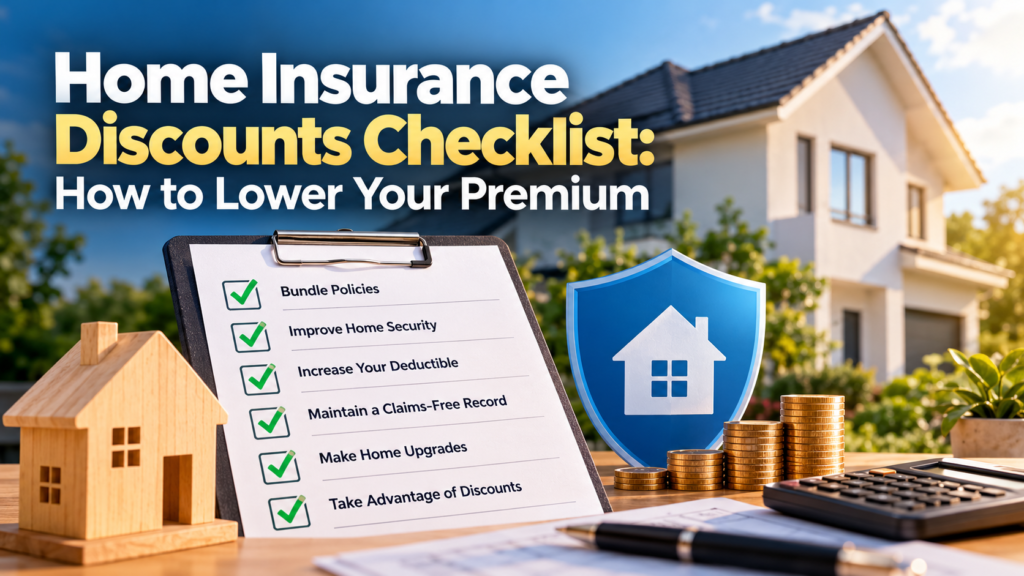
Most homeowners are only using a fraction of the discounts their insurer actually offers — not because insurers are hiding them, but because they simply aren’t advertised the way the base premium is. With home insurance costs having risen significantly over the past couple of years, stacking the right combination of discounts can meaningfully offset that increase. Use the interactive checklist below to see which discounts you likely qualify for, then read on for the details behind each one.
Policy Structure Discounts
Bundle your home and auto insurance. This is usually the single largest discount available, typically saving 10-25% per policy, and up to 40% at some carriers depending on your state and insurer. If you haven’t shopped a bundled quote recently, it’s worth starting here.
Raise your deductible. Increasing your deductible from $1,000 to $2,500 saves an average of around 9% a year. Just make sure you could comfortably cover the higher deductible out of pocket before choosing it purely to save on premium.
Pay annually instead of monthly, and enroll in autopay. Many insurers offer a small discount for paying your full premium up front rather than in installments, plus additional savings for automatic payments, paperless billing, and consistently paying on time.
Ask about a loyalty discount. Some insurers reward long-term policyholders — commonly around 5% after three to five years with the same company, and up to 10% after six or more years.
Home Safety & Security Discounts
Install a monitored security system. A professionally monitored security system is one of the more commonly cited discounts, and combining it with smoke, fire, and water detection can increase the savings further.
Add smoke detectors and fire alarms. Even a modest upgrade here — around 5% in some cases — is worth claiming if you haven’t already reported it to your insurer.
Install smart water leak and shutoff technology. Smart leak detectors for water and carbon monoxide, along with automatic water shutoff devices, are increasingly rewarded by insurers, since water damage is one of the most common and costly claim types. These upgrades can often pay for themselves within a few years of insurance savings alone.
Add carbon monoxide detectors. Frequently bundled into the same discount category as smoke and fire alarms, and simple to install in most homes.
Home Construction & Upgrade Discounts
Upgrade to an impact-resistant roof. A Class 4 impact-resistant roof can cut premiums by a notable margin — commonly cited in the 10-35% range depending on your insurer and location — making it one of the more impactful single upgrades if your roof is due for replacement anyway.
Ask about a wind mitigation credit. If you live in a hurricane-prone state and meet specific wind-resistance standards (reinforced roof-to-wall connections, impact-resistant windows, and similar features), you may qualify for a wind mitigation discount.
Update outdated electrical or plumbing systems. Beyond simply qualifying you for coverage at all (a common issue for older homes), updated systems can also reduce your premium by lowering your insurer’s assessed risk of an electrical or water-related claim.
Mention if your home is newly built or recently renovated. Newer construction and recent major renovations are generally viewed as lower-risk, and some insurers offer a discount specifically for this.
Green & Energy-Efficient Home Discounts
Get LEED or similar green certification. Some insurers, including Travelers, offer a discount specifically for homes certified «green» under a recognized program like Leadership in Energy and Environmental Design (LEED).
Install solar panels or a smart thermostat. Certain insurers extend green-home discounts to solar panel installations, smart thermostats, low-flow plumbing fixtures, and other sustainability-focused upgrades.
Use Energy Star-rated appliances. A smaller discount in most cases, but worth mentioning to your insurer if your home has been substantially upgraded with efficient appliances.
Personal & Lifestyle Discounts
Maintain a claims-free history. Insurers commonly reward homeowners who haven’t filed a claim in several years — ask specifically how your insurer structures this discount, since the threshold and savings vary.
Check your credit-based insurance score. In most states, insurers can use a credit-based insurance score (similar to, but not identical to, your standard credit score) to help set your rate — maintaining strong credit can meaningfully affect your premium where this practice is allowed.
Ask about an HOA/community discount. If your home is in a neighborhood governed by a homeowners association, you could save up to 10% at some insurers, reflecting the added oversight and maintenance standards HOAs often enforce.
Mention if you work from home. Some insurers offer a modest discount for remote workers, reasoning that a consistently occupied home may face a somewhat lower risk of certain losses, like burglary.

How to Actually Use This Checklist
Ask your current insurer directly which discounts you’re missing. Since not every discount is prominently advertised, a direct conversation — «what discounts do I qualify for that I’m not currently getting?» — often surfaces savings a quote page alone won’t show.
Re-shop annually, even if you’re happy with your current insurer. A meaningful share of homeowners who shop around for a new company each year find a better rate, and pricing for identical coverage varies significantly between insurers.
Prioritize upgrades with the best savings-to-cost ratio. A roof replacement is a major expense, but if your roof needs replacing anyway, choosing impact-resistant materials can meaningfully offset the cost through both the discount and reduced future claims risk. Smaller upgrades like smoke detectors or water shutoff devices tend to pay for themselves faster.
Don’t sacrifice adequate coverage just to maximize discounts. The cheapest policy isn’t automatically the best one — balance premium savings against making sure your coverage amount and policy terms actually protect you after a real loss.
Confirm which discounts stack. Not all discounts combine in a simple additive way — ask your insurer for a full quote reflecting every discount you qualify for together, rather than assuming percentages simply add up.
Frequently Asked Questions
What’s the single biggest home insurance discount available? Bundling home and auto insurance with the same company is typically the largest single discount, commonly in the 10-25% range and up to 40% at some carriers — though the exact amount depends on your insurer, state, and specific policies.
How much can I really save by stacking multiple discounts? Homeowners who combine several discounts — bundling, security systems, a claims-free history, and a higher deductible, for example — can often reduce their total premium by 30% or more, though the exact combined savings depends on which discounts your specific insurer allows to stack.
Do all insurers offer the same discounts? No. Discount availability and amounts vary significantly by insurer and by state — a discount that saves 10% at one company might not be offered at all by another, which is part of why comparing quotes across insurers matters as much as maximizing discounts with your current one.
Will raising my deductible actually save meaningful money? Yes, generally — increasing your deductible from $1,000 to $2,500 saves an average of about 9% a year. Just make sure the higher deductible amount is one you could comfortably afford to pay out of pocket if you ever need to file a claim.
How often should I shop around for a better home insurance rate? Many financial and insurance experts suggest re-shopping annually, since rates for identical coverage can vary meaningfully between insurers and your own circumstances (claims history, credit, home upgrades) change over time — a significant share of homeowners who shop around each year do find a better deal.
Bottom Line
Most of these discounts require nothing more than a phone call or a quick online update to your policy — the bigger opportunity is usually in not knowing they exist rather than any real barrier to claiming them. Start with the checklist above, ask your current insurer directly what you might be missing, and get at least one comparison quote from a different carrier before renewing. Between bundling, security upgrades, a well-chosen deductible, and a bit of shopping around, most homeowners have real room to bring their premium down without giving up meaningful coverage.